|
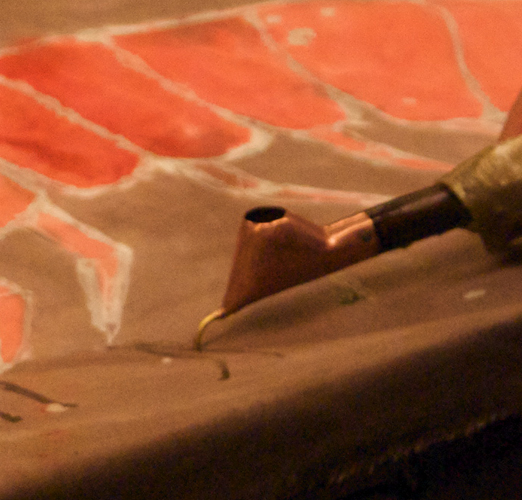
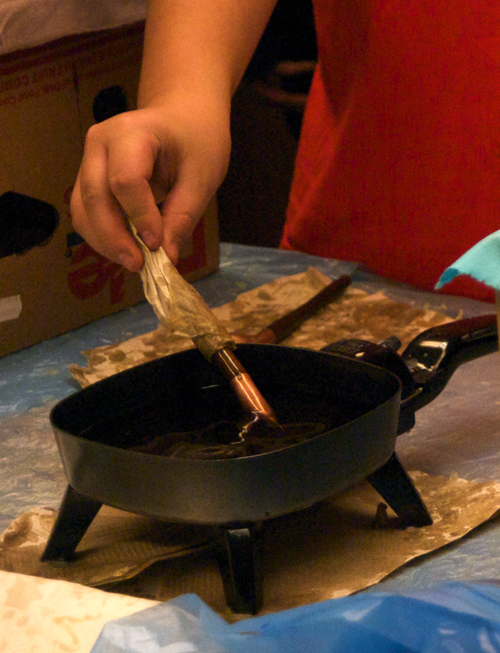
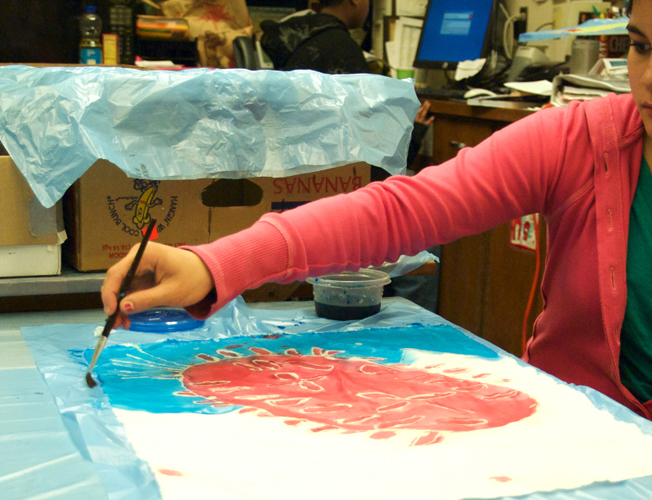
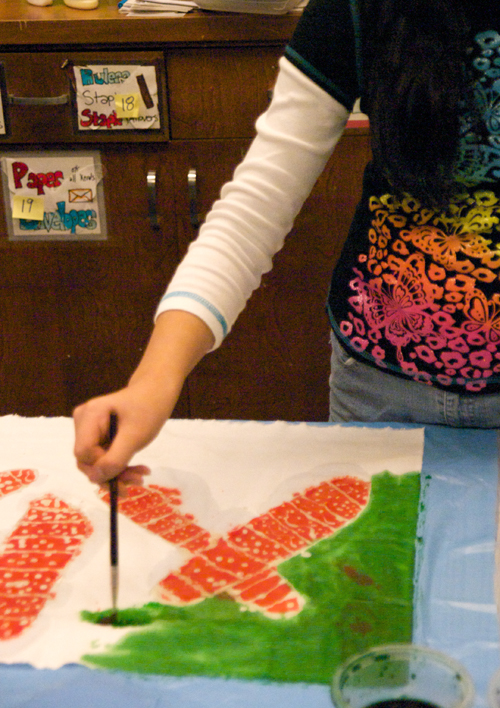
This account exists in multiple parts: • Volume 1: Explanation of the Project • Volume 2: The Frames and the Four Factors • Volume 3: Starting the Batik Process • Volume 4: Color Planning Gets More Complex • Volume 5: It's Time to Die! ...ahem... I Mean Dye. • Volume 6: These Incredible Artists Click on any image throughout to see a larger version. :::::::::::::::::::::::::::::::::::::::::::::::::::::::::::::: For the batik part of the project, each student chose a microorganism to represent the bottom of the food chain in their biome of study. The "microorganisms" ranged in size from the truly microscopic, such as bacteria, to the simply small, such as insects. The students sketched their organism in pencil on white fabric, and stretched the fabric across the top of a cardboard box to give it some air flow. To apply the wax to the fabric, a tjanting was filled with wax heated in an electric skillet, and applied to the fabric via the spout. The students carefully followed their pencil lines with the tjanting to create wax lines. Batik is an imprecise art. Using an unfamilar tool to apply an unfamilar medium to a less than rigid surface, all whilst avoiding drippy hot wax, made for some shaky lines and unintentional blotches. Regardless of the original intent, however, the final results were nothing less than spectacular. 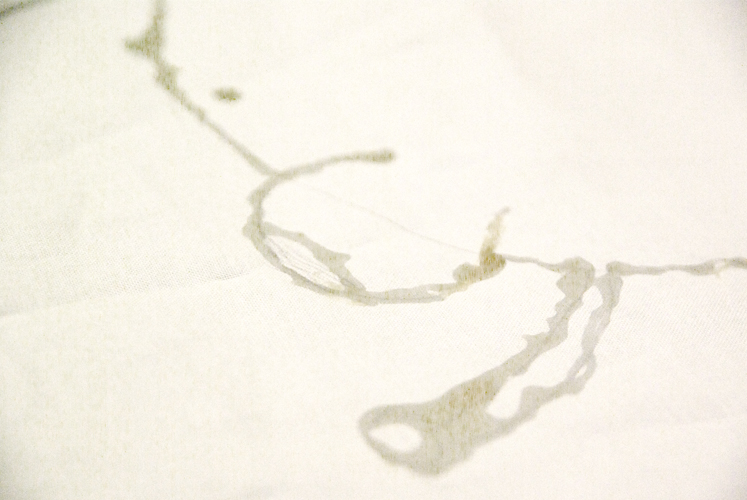 The purpose of the wax was twofold. Wherever the wax soaked into the fabric, it acted as a resist for the dye, keeping the color of the fabric static. For the initial round of wax for each student, it meant that the first wax lines and dots would remain white.  The second purpose of the wax was a barrier for the dye. The students carefully painted the fabric dye onto their designs. The liquid dye spread out on the fabric, soaked up by the fibers of the cloth, but would be stopped (most of the time) by a line of wax. This allowed the students to put contrasting vibrant colors adjacent to each other in their designs. The first layer of dye was then left to dry overnight in preparation for the second layer of wax and dye. 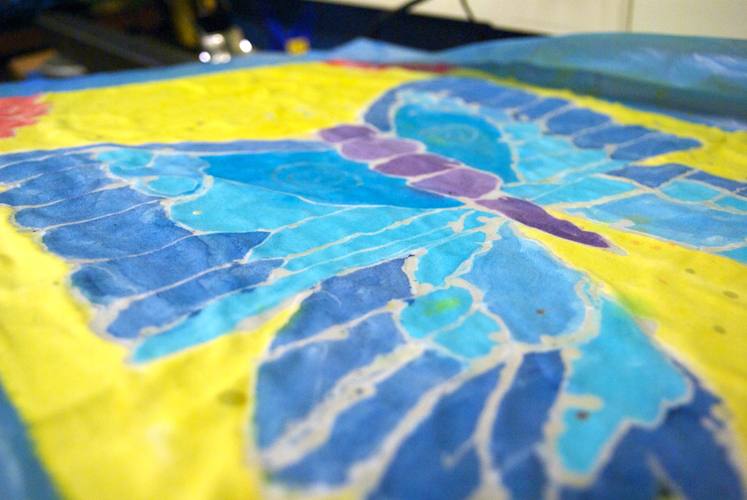  • Previous Post - Epic Art, Volume 2: The Frames and the Four Factors • • Next Post - Epic Art, Volume 4: Color Planning Gets More Complex • 5/25/2010 08:49:29 pm
Resources like the one you mentioned here will be very useful to me! I will post a link to this page on my blog. I am sure my visitors will find that very useful. Comments are closed.
|
Topics
All

Archives
May 2021
|


 RSS Feed
HOME |
PHOTOGRAPHY COLLECTIONS
|
© COPYRIGHT 2020. ALL RIGHTS RESERVED.
|