Leading up to this year's conflict project, the students studied conflict through reading Suzanne Collins's book, The Hunger Games. No doubt you've heard of it by now.

Students from all three class periods who owned the book temporarily donated their copy to the classroom, so that each period had enough copies for all of the students to follow along and take turns reading aloud.

Throughout the reading, each class participated in their own version of the Hunger Games. Each period had a designated paper "arena" on the wall, and tributes (students drawn from a hat) moved around the arena seeking food, water, and shelter. When tributes encountered each other, those students had to battle it out with Minute to Win It style games. Non-tributes played the roles of mentors and stylists, and advised their tributes on winning strategies.

As each class finished reading the book, they then had one week to complete a project, proving that they understood the nature of conflict between various characters in the novel. The project could take any format, and below are some examples of the students' work (click any picture to enlarge).


This complex board game took players from District 12, through the Capitol, and on to the Arena. Each square had either a corresponding point value or a specific card type to be drawn. Each card prompted the player to make decisions that ultimately decided the player's fate.

Some other board games appeared in the mix. The students finished reading the book and creating these projects before the movie debuted in theaters, but images of the characters were already readily available, and the students took advantage of them.


Dioramas were also a popular medium for showing the various conflicts involved in the story. Each project, regardless of medium, involved some sort of write-up, to demonstrate full comprehension of the concepts. Some write-ups were attached to the projects themselves, as in the diorama on the left.


Students took advantage of the open-ended nature of the assignment and played to their individual strengths. Shown below, left to right and top to bottom: a poster, a brochure, another poster, an essay, a student finishing up the cover of her fan-fiction piece, students playing a student-designed Hunger Games themed computer game, a complicated diagram showing the interrelationships of the story.


Overall, the projects were quite impressive, and the fictional conflicts were a good starting point for studying real historical conflicts in the future.


Leading up to this year's conflict project, the students were shown a variety of images, and asked to generate "non-Google-able" questions about the pictures. For example, for the picture of the space shuttle, a boring, Google-able question would be, "How much fuel does it take to get to the moon?" A much better, high-level question would be "What makes humans want to explore space?"
The students worked in small groups, and thought of several questions for each picture. Some questions very specifically pertained to their intended picture, like these ones about this picture of Clark Kent becoming his Superman persona:
Are heroes made of leadership or super powers?
What would happen if Superman wasn't good?
But other questions were so universal that it didn't really matter which picture they were originally intended for. Below are some of my favorites, along with the pictures. I'll bet you can't tell which questions match each picture.

Without mathematicians, how advanced would technology be?
If a single spark can give hope, why is there so little of it?
How come the wars are what we remember, and not the peace?
Why do we spend so much money only to destroy relationships?
Why do people love?
Why does he have to hide?
Why fight freedom?
How would it feel to be feared?
At school, why do they teach us to make friends while America is making enemies?
Why does it take such a massive effort to create simple changes to society?
Why don't some people agree with using non-violence to get their point across?
If one thing simply stopped existing, how would that affect other things around it?
How much can friendships change life?
Has war become easier as it gets colder?
What are you going to fight or destroy?
What drives our thirst for knowledge?
How can two very different people create a bond?
How did they think they could justify their actions?
What drives humans to create such destructive things?
Where would we be if this never happened?
The next step was just as powerful. The students were asked to create a title for each picture based on the questions. Just like the questions themselves, the title for each picture could be applied to almost any of the pictures:
Vendetta
Courage
Hero?
What If...
Defiance
The Importance of a System
The Importance of Love
Knowledge and Accomplishment
Communicative Courage
Conflict Resolution Through Friendship
Real Heroes
The Hate Instigator
Love for Hate
Opposite of Love
A Spark of Hope
Big Effort = Big Impact
Why Fight Freedom?
Strength of Courage
Knowledge is Power
To Unknown Darkness
The ultimate goal was a single title or idea for all of the images together, which was "power." This is the launching point for understanding the nature of conflict for the project.


Prayer Flags
Culture, 6th Grade:

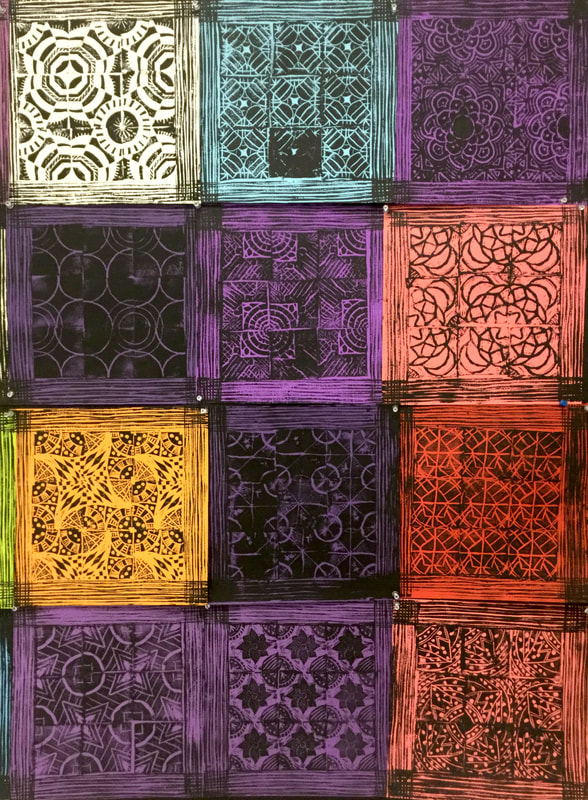
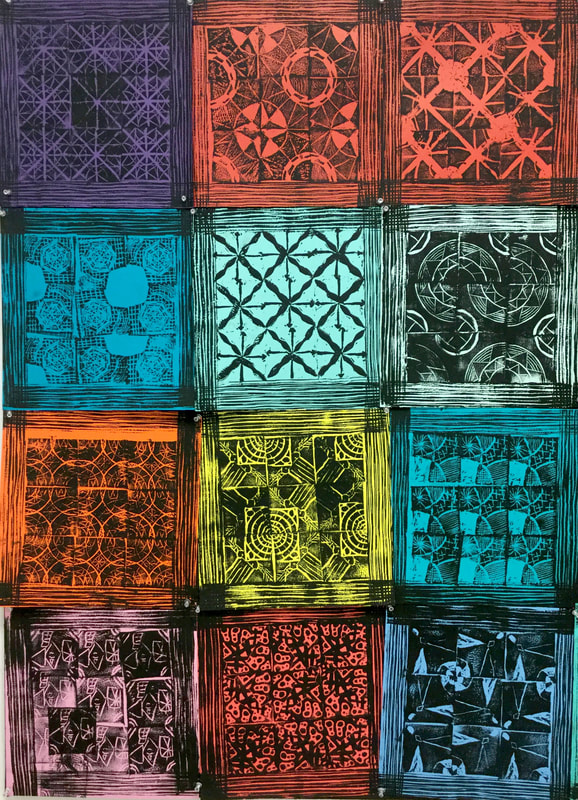
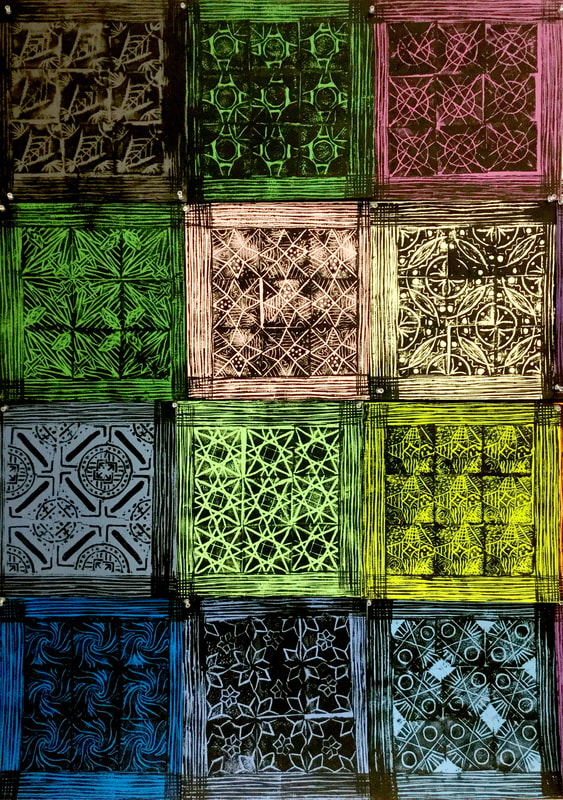
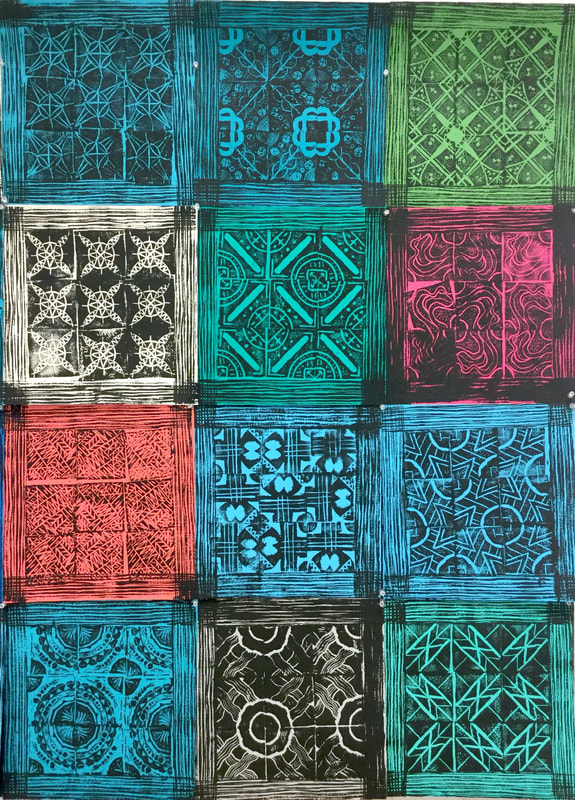
Individually, the flags look great, but now that they are hanging around the garden, they look spectacular! The vibrant colors will fade with time, and the frayed edges will become more frayed in the wind. Yesterday, the students wore their corresponding t-shirt for a photo shoot below their flag (if one of the students is yours and you would like to see those photographs, contact the teacher).


All 59 flags are shown below (in the same order they are hung around the garden). There are still a few fundraiser shirts left in my Etsy shop if you like these designs!

All Culture and Conflict posts can be found under the topic heading: Diversion Audit.


Conflict, 7th Grade:

The research papers on each student's chosen conflict were due today. The students have been working hard on the research component, and have not had as much time to devote to the art, but some progress is being made anyway. I must move on to my other job after spring break, so I won't get to help these students complete the project, but my spies will keep me informed of their progress. If I can steal away to take more photos later in the process, I will.
All Culture and Conflict posts can be found under the topic heading: Diversion Audit.


Painting by Daogreer Earth Works
Conflict, 7th Grade:

As students finish their Know Hope piece and their chess board, they are beginning to form their chess pieces. They may choose any theme for their pieces, but the design must adhere to the following rules:

1) The king must be the tallest piece
2) The queen must be second tallest, and she must show all directions of movement, either by having 8 points or sides, or by being perfectly round
3) The bishop must display some diagonal element
4) The knight must have an L-shaped element
5) The rook must indicate the four cardinal directions
6) The pawn must be the shortest piece

The pieces must also fit onto the chess board and be able to stand upright on their own.

All Culture and Conflict posts can be found under the topic heading: Diversion Audit.


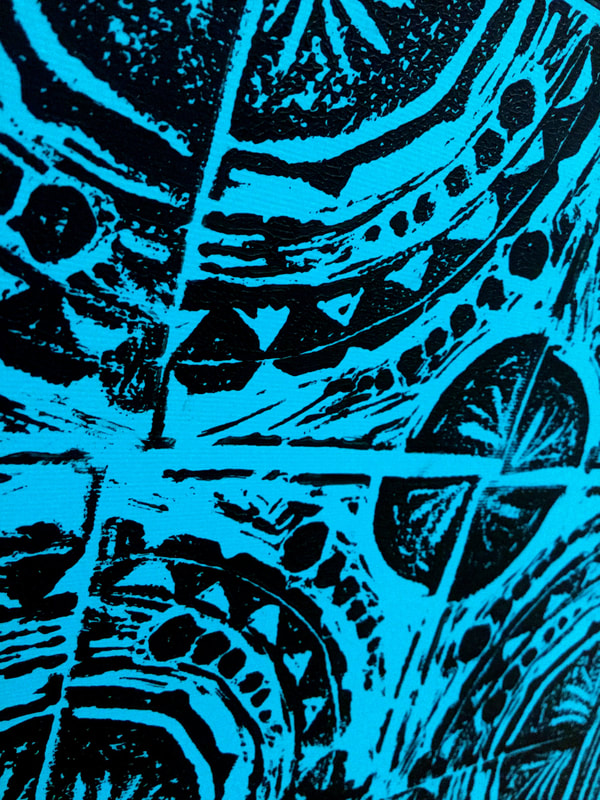
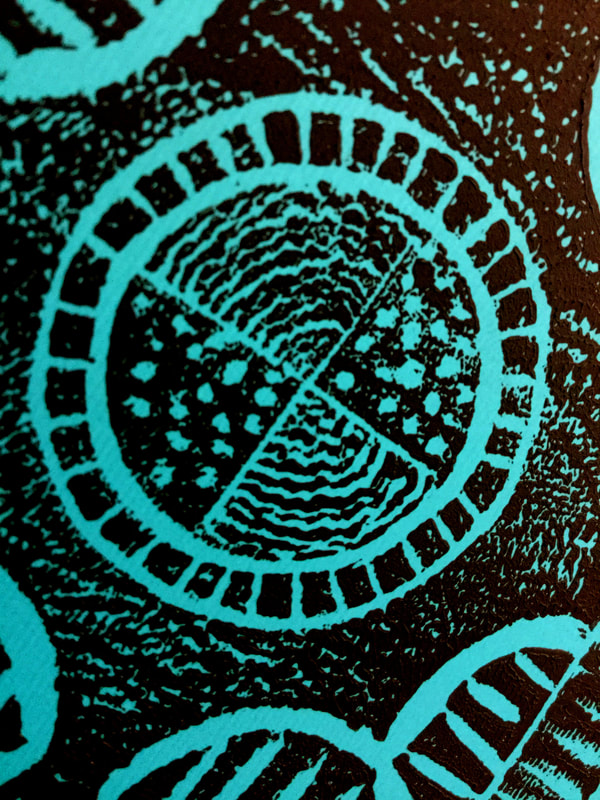
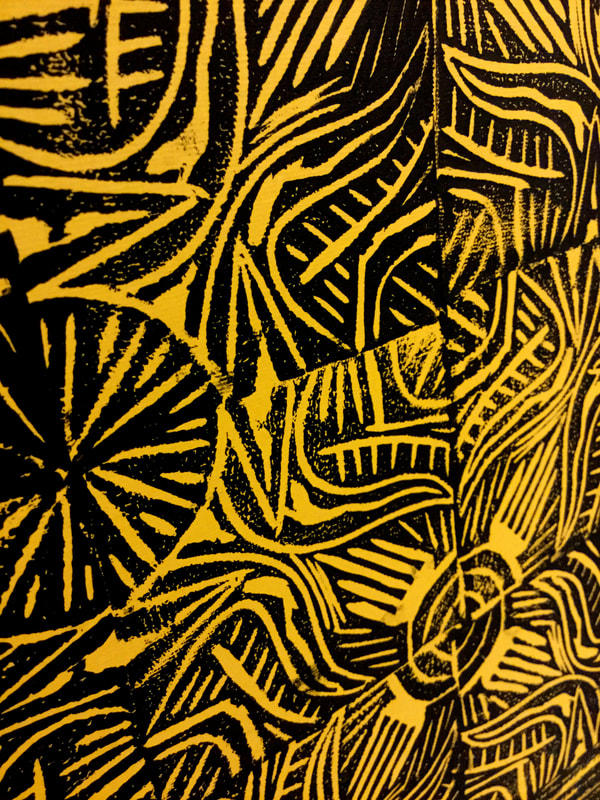
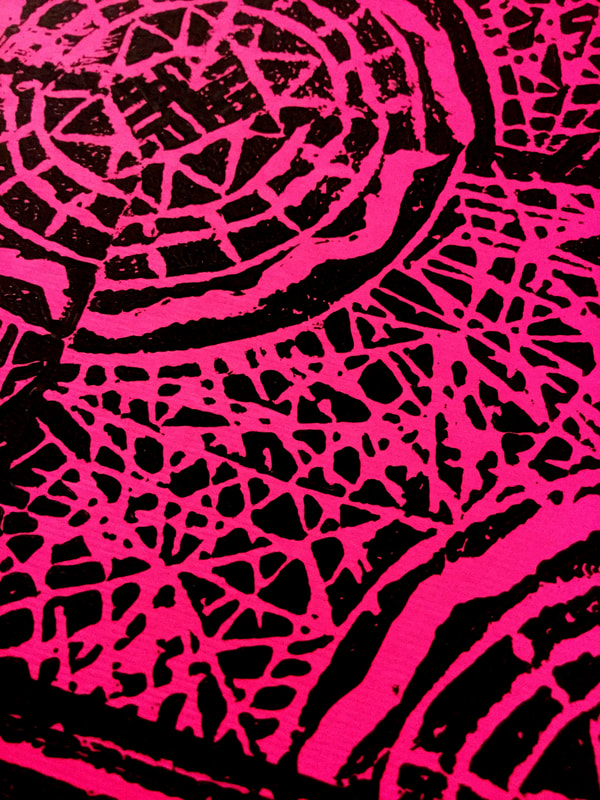
Culture Shirts
Culture, 6th Grade:

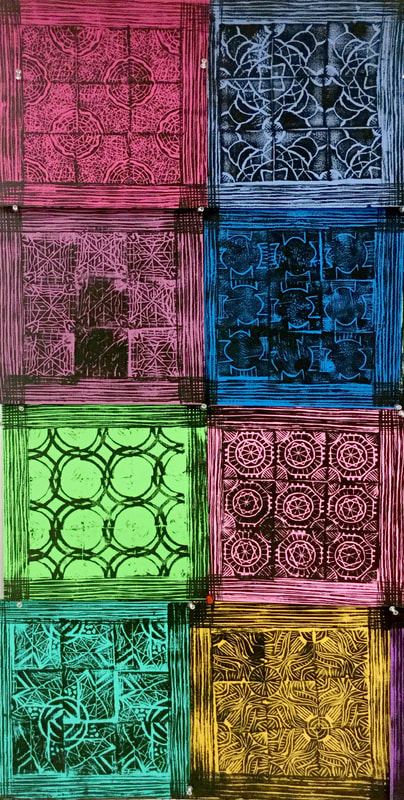
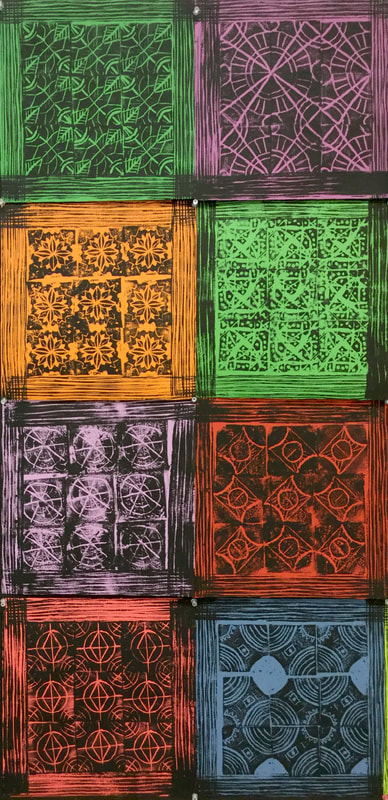
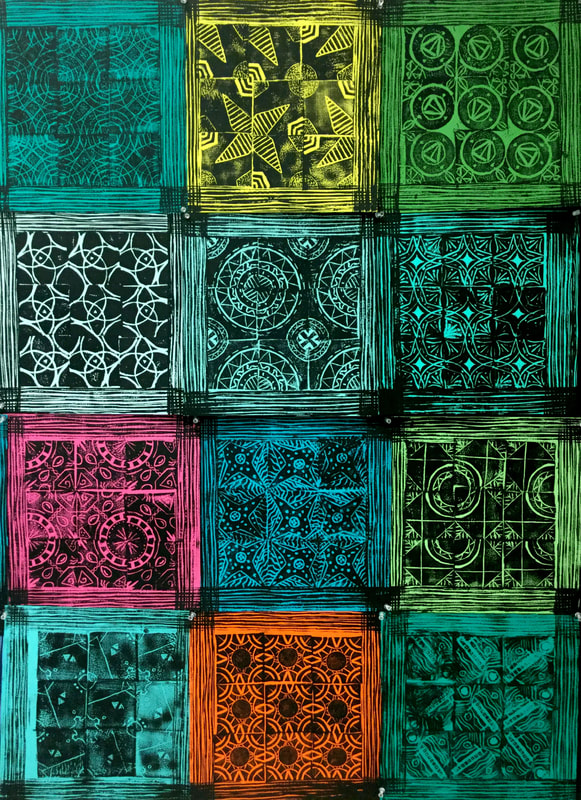
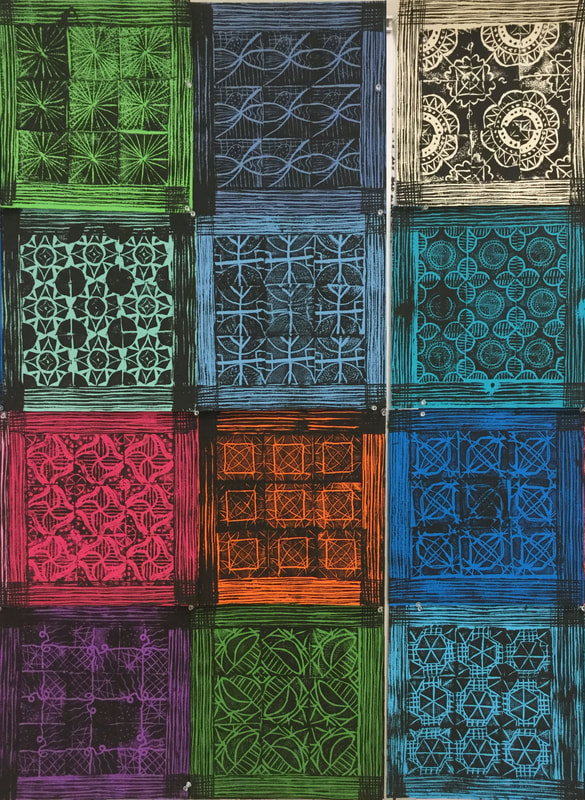
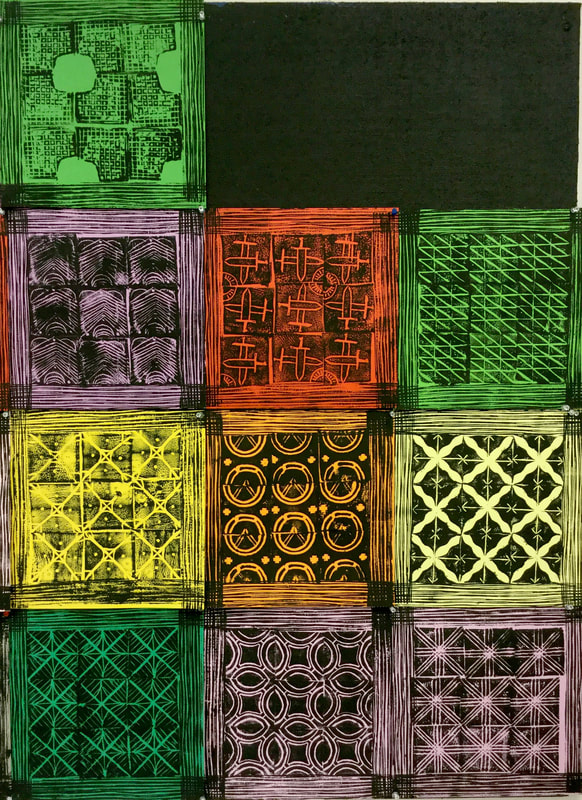
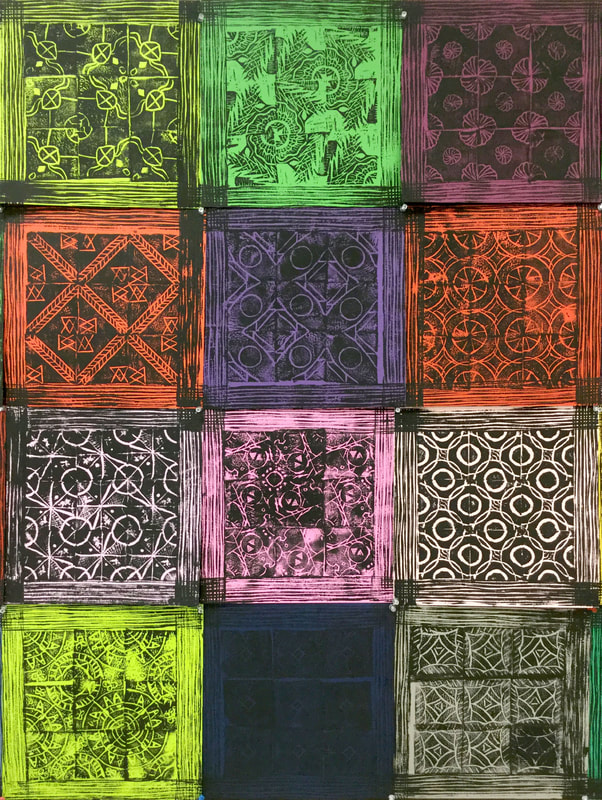
Once every student had completed their design, we gathered all the students from both classes around the collection of art. Students pointed out designs about which they were curious, and the artist of that design took a few moments to speak about the meaning behind their art.

The designs are currently on display in the 6th grade common area, and the students will be able to take home their shirts on Friday after we hang the corresponding prayer flags around the garden. It's supposed to be rainy until... well... June, but maybe we'll catch a break long enough to hang the flags while sporting the shirts.

Fundraiser shirts are still available here. Proceeds go to support future artful learning projects.
All Culture and Conflict posts can be found under the topic heading: Diversion Audit.


Conflict, 7th Grade:

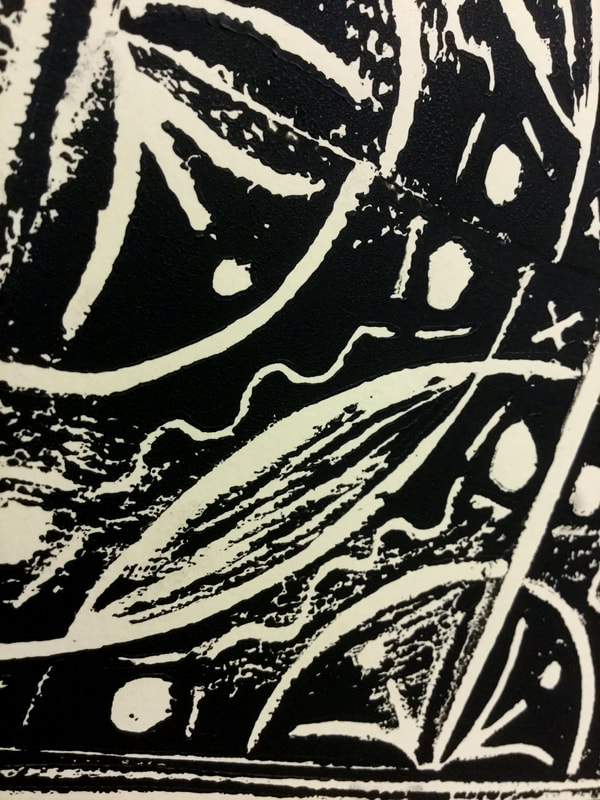
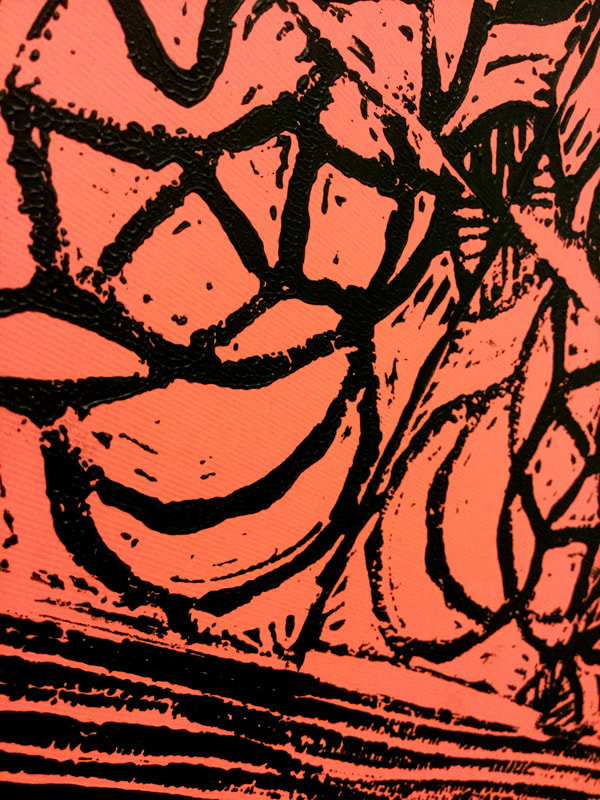
Watching the images emerge over the course of just a few days has been really enlightening. Though some students do not believe themselves to be good artists, I can find merit in every single one of their pieces. There is so much beauty and power in the black lines, the color choices, the way the watercolors swirl and dry unevenly, the words on the dictionary page showing through, and the images themselves.

We have started to hang the finished pieces on the wall in the classroom. The final wall will be impressive when we get all 60 of them up there. Unfortunately, these pieces say so much more when you look at them up close. The ones highest on the wall will not be able to be inspected fully.
All Culture and Conflict posts can be found under the topic heading: Diversion Audit.


Know Hope
Conflict, 7th Grade:

Taking a break from the chess boards for a bit, we began studying one of our masterworks today. Know Hope is a street artist creating works primarily in Israel. While his website gives a good sampling of his gallery installations, his true genius lies with the art he creates in the context of surrounding conflict. This Google image search ("know hope" art) shows his more powerful works.

In the context of the conflict project, the students are exploring chess as a metaphor for two ideas being unable to occupy the same space at the same time. Know Hope's art is a thought-provoking juxtaposition of hope and conflict, painted directly on the physical evidence of that conflict, to be pondered and appreciated by the everyday participants of it.

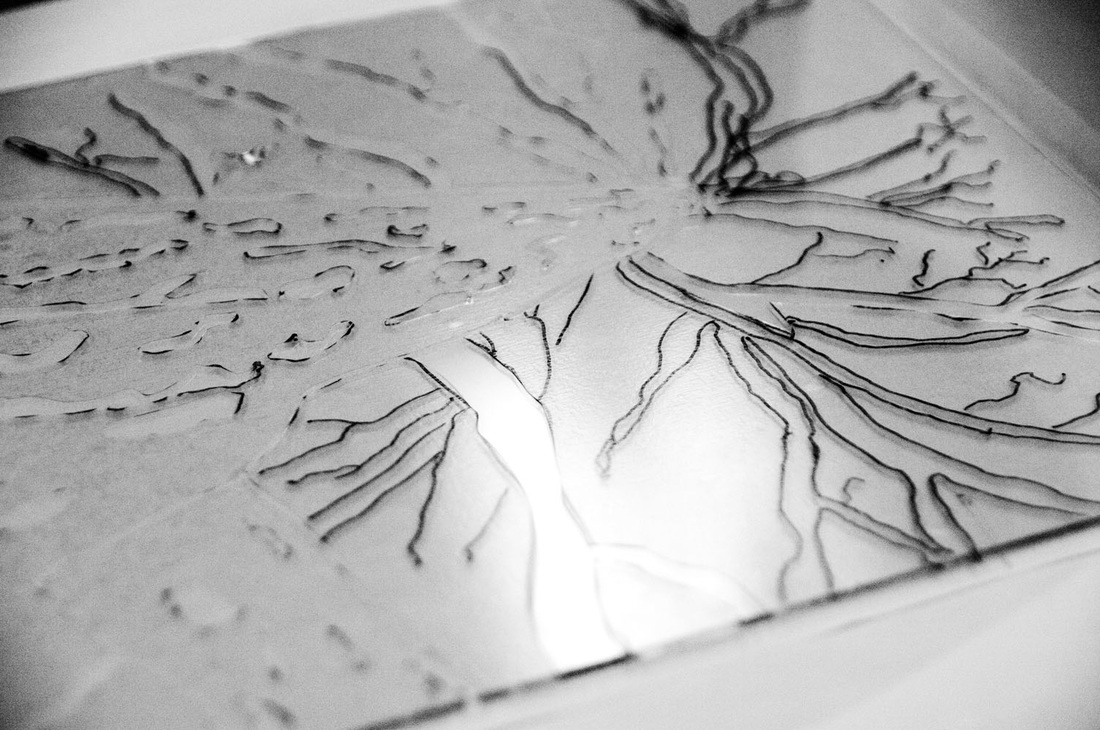
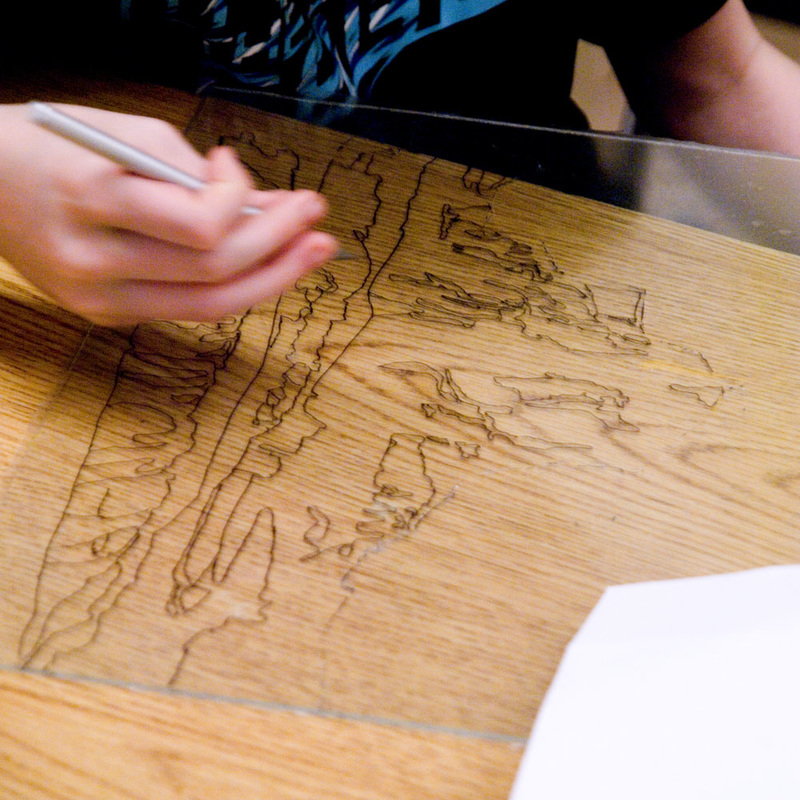
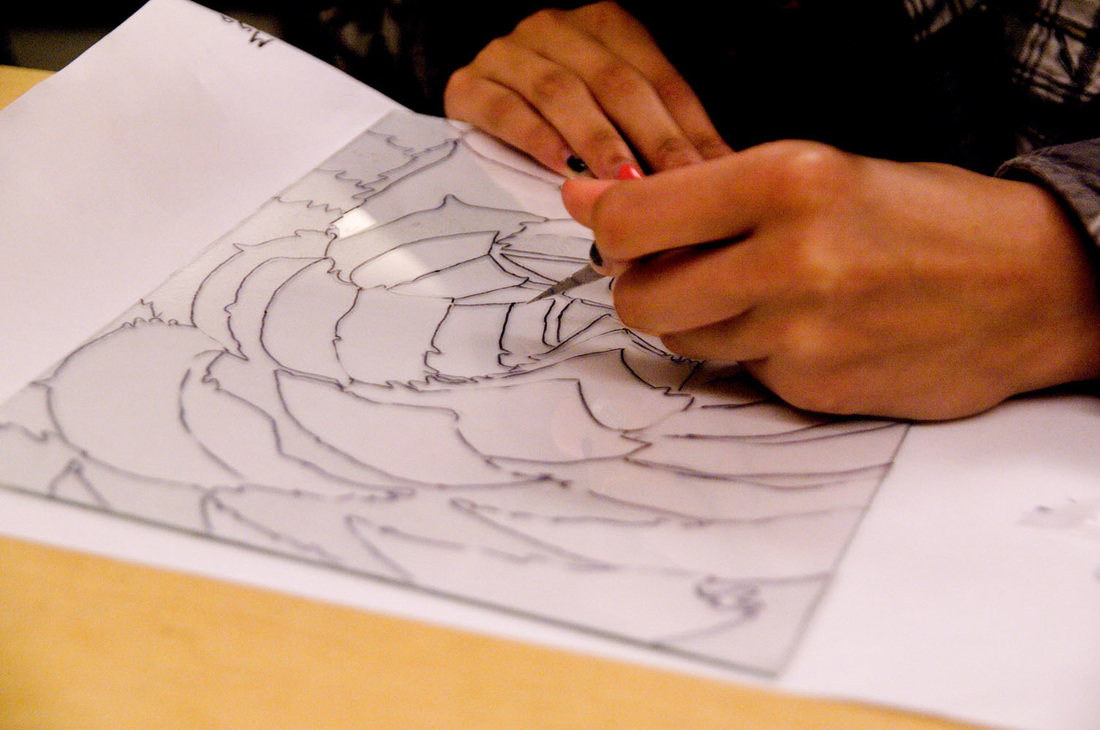
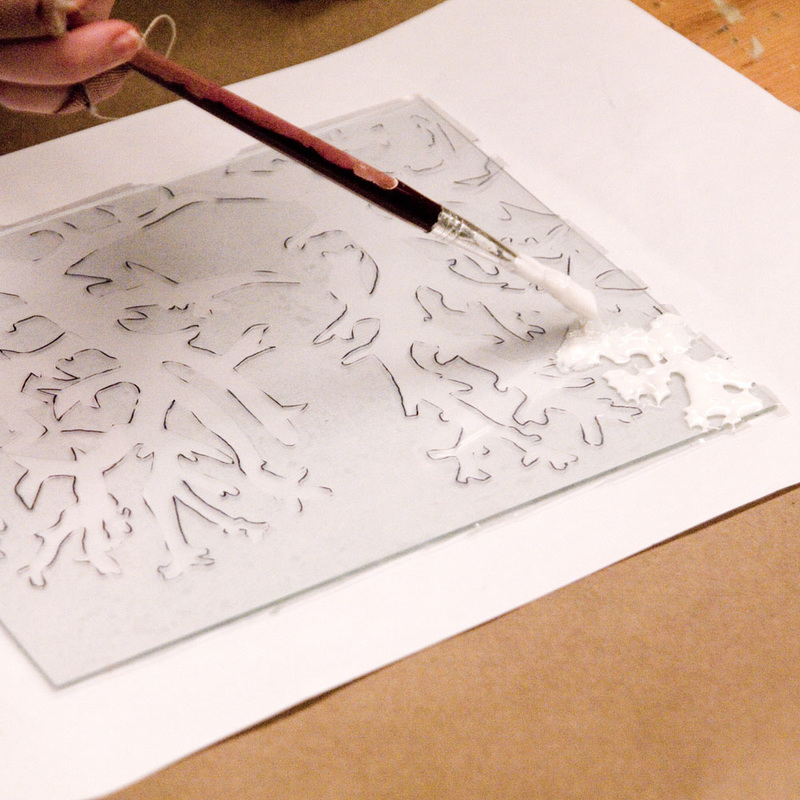
Exploring the same ideas of juxtaposition, the students will be creating a piece of art to represent their conflict of study. Each student chose an image of their conflict, and traced the image onto translucent vellum paper. The image will then be enhanced with watercolor, and finally affixed to a page of text in such a way that the text shows through.
Here are some of the designs in progress. The students chose some really powerful imagery, and the final pieces should be pretty impressive when they're finished.
All Culture and Conflict posts can be found under the topic heading: Diversion Audit.


Picture
Conflict, 7th Grade:

Most students have both colors on their chess boards at this point, and it has come down to practicing patience with getting the lines as straight as possible. Soon we will varnish the boards and get to work on the chess pieces.

I love the reflections on the paint canister on the photo above.
All Culture and Conflict posts can be found under the topic heading: Diversion Audit.
the long road


Picture
Conflict, 7th Grade:

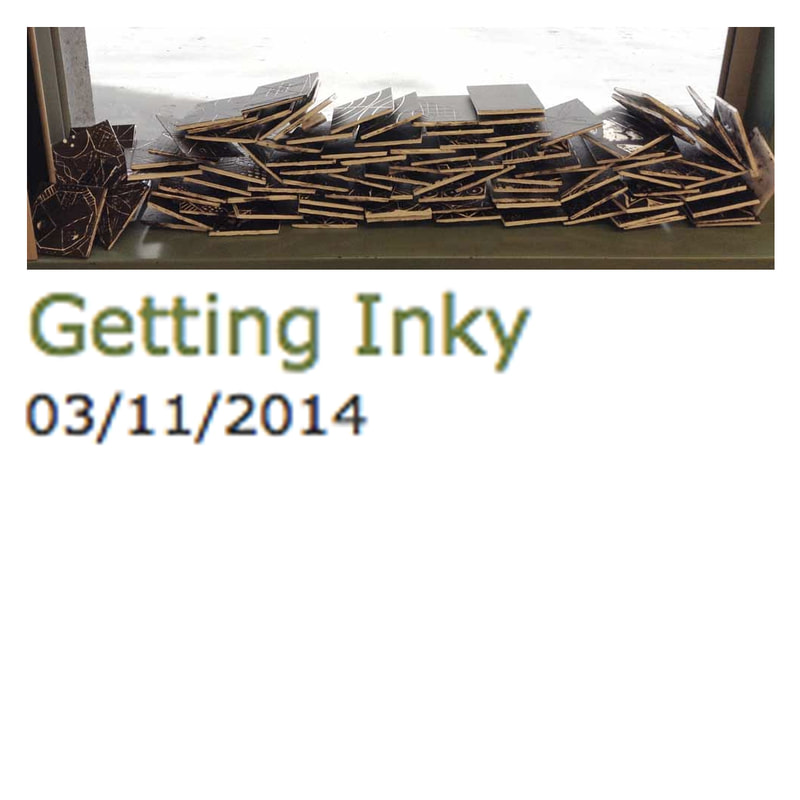
Today the chess boards began to transform from nondescript beige tiles smudged with pencil lines to stunning fields of color and contrast.

We added felt to the bottom so the tiles wouldn't scratch the tables, and when all coats are done, we'll add a clear layer of protective varnish to keep the paint from flaking off as future battles of kings and pawns are waged on the colorful surface.

All Culture and Conflict posts can be found under the topic heading: Diversion Audit.
Ni Hao Y'all


bloglovin


Back to top

w e l c o m e
b u t t o n l o v e
r e w a r d s